Executive Summary
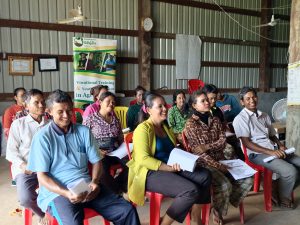
Sustainable Soil for Life Association’s (SSLA) first Strategic Plan was effectively built on its achievements and lessons learned from 3 years fieldwork experience with farmers in Battambang province to improve their income, livelihood, help them address climate challenges, and their political, economic and social and environmental situation at community level.
SSLA understands that poverty in Cambodia, especially in farmer households is a result of a complex combination of economic and social exclusion, inequalities, deprivation of rights, limited social protection policies and weak enforcement of laws. The problem is further exacerbated by entrenched farmer inequalities, discrimination against women, and negative perception of farmer work.
| SSLA’s Approach to Change
“To be empowered and resilient to shocks and hazards, farmers, women and youth must have technical capabilities, access to natural resources, sustainable market, and control over the mechanisms and policies of food production and distribution’” |
While poverty has declined in recent years, 37.2 percent of the population (~6,043,000 people) are still under the multidimensional poverty rate while an additional 21.1 percent are classified as vulnerable to multidimensional poverty (~3,433,000 people) (Multidimensional Poverty Index (MPI), UNDP, 2018). 90% of the poor reside in rural areas, with the vast majority being farmers, women and youth.
Farmers, women and youth are particularly vulnerable, as cultural, social, and economic attitudes in addition to structural and environmental factors present added barriers to the advancement of their empowerment and to the achievement of the Sustainable Development Goals.
| SSLA’s Programme Themes
1. Youth Empowerment 2. Resilient Local food System 3. Community Economic Development |
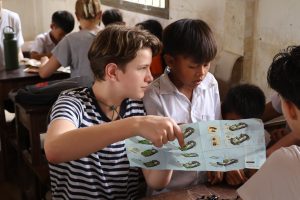
In response, SSLA has developed a holistic approach to induce deep and structural change in food systems towards sustainability, which includes a focus on equity, inclusion and social justice, climate resilience, solidarity and power relations among farmers, women and youth, including economic and market actors and decision-makers. Our two organizational priorities in support of our programs include 1) Enhancing SSLA’s skills on evidence-based advocacy for agroecology at local level; 2) Improving SSLA’s organizational development and programmatic, financial, administrative and human resources management.
Moving forward, deep and structural change includes implementing and supporting alternative food markets, focusing our strength on farmer community-led, sustainable value chain, youth vocational and technical education, youth social entrepreneurship, consumer awareness, and solidarity coalition between market and food system stakeholders.
In order to achieve the expected changes in the food system, SSLA plans to expand its work on the promotion of democratic decision-making with community leaders, subnational authorities and agricultural cooperatives. SSLA will support the community to improve their capacity to lead evidence-based advocacy in order to influence and drive sustainable changes in the local food system, directly and through networks, publications and media. All program interventions will represent an important focus as does increasing engagement with youth as potential leaders.
| SSLA’s Programme Approach
1. Supporting farmers, especially women and youth, led initiatives. 2. Promoting Food Sovereignty. 3. Facilitating participatory and change-oriented research and action 4. Building stakeholders coalitions 5. Mainstreaming the agroecological approach according to its 10 elements (FAO): resilience, diversity, efficiency, synergies, recycling, social and human values, food and culture tradition, circular and solidarity markets, and responsible governance. 6. Evidence-based advocacy |
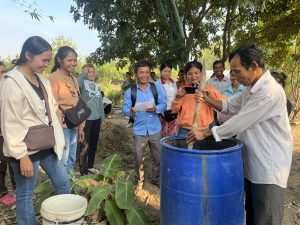
SSLA follows the theory created by Gliessman that defined 5 levels of agroecological transition and the “Tool for Agroecology Performance Evaluation” (TAPE) based on the 10 elements of agroecology (FAO) to monitor the change in the food system as a continuum of a transition. SSLA focuses on redesigning the whole agroecosystem based on ecological processes at farm-level (level 3), and at food system-level, going beyond production and focusing on socio-economic change such as re-establishing connections between growers and consumers and responsible governance (level 4 and 5).
Agroecology is a powerful approach for climate change adaptation and therefore contributes to the Nationally Determined Contributions NDCS). SSLA adopts agroecology as the core approach of its program to reduce the impact of climate change over vulnerable communities.
To transform food systems and shift paradigms, SSLA will strengthen and expand its work focused on establishing direct links between producers and consumers, buyers and retailers improving farmers access to truly sustainable livelihoods and building food sovereignty. Consequently, raising consumer awareness to prioritize local agroecological products, enabling youth and women to practice agroecology, leading initiatives to improve responsible governance for sustainable food systems, supporting market actors to improve their skill, awareness and coordination to promote a circular economy. SSLA management and staff capacity will focus on deepening accountability at all levels, improving performance management, and monitoring of program plans and demonstrating results.
| SSLA’s Programme Outcomes
1. Enhancing farmer to farmer knowledge and practice of agroecology. 2. Empowering young farmers. 3. Building circular and solidarity markets. |
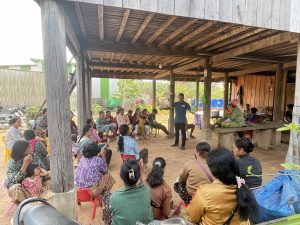
The strategic goal of Sustainable Soil for Life Association’s Strategic Plan 2021-2023 supported by SSLA vision and mission is defined as “Vulnerable small-scale farmers, rural youth, direct consumers and buyers are empowered to promote an agroecological food system to improve their livelihoods and wellbeing”, which is breakdown in five strategic objectives with accompanying outcomes (3 programme strategic objectives and 2 organizational strategic objectives):
Female and male farmers have enhanced their knowledge and practice of agroecology, improving their livelihoods and resilience, while preserving natural resources.
- Young people have entered decent employment and started entrepreneurship initiatives based on agroecology principles, enabling them to improve livelihoods and wealth of local communities.
- Producers, Consumers and Buyers improved their skills, awareness, and coordination to promote circular economy and solidarity markets.
- SSLA has improved its skills and leadership on evidence-based advocacy in agroecology at the local level so that it can support vulnerable actors of the food system to use their rights regarding food sovereignty.
SSLA has improved its organizational development and program management, including financial, administrative and human resource management.